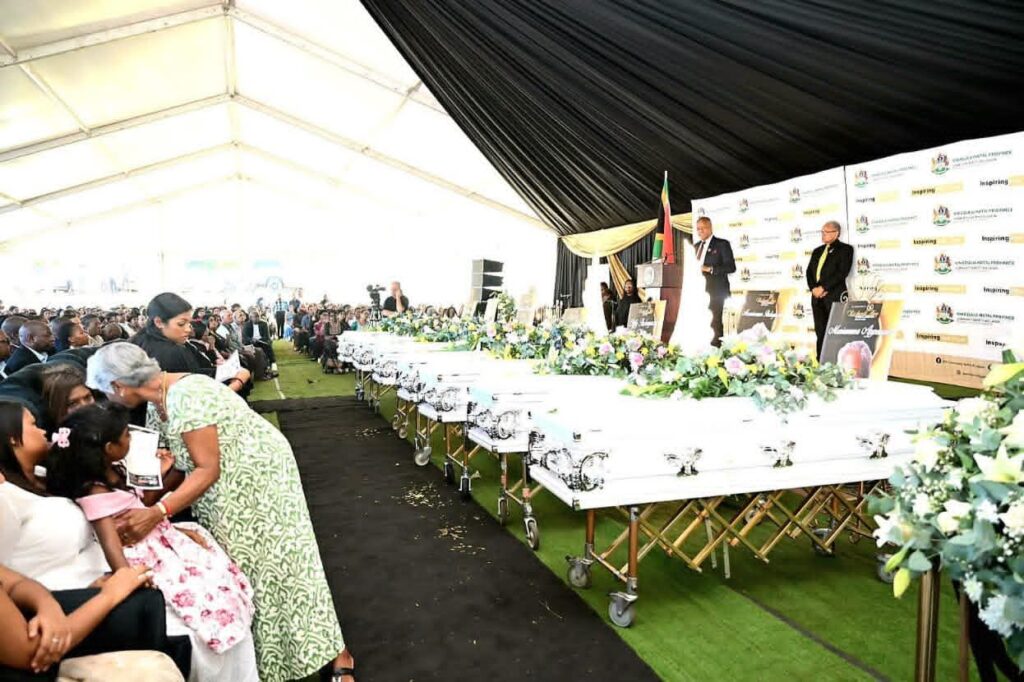
Seven members of the Monswamy family, and Padayachee family were laid to rest on Sunday, 26 April 2026, following their brutal kidnapping and murder in Newtown, near KwaDukuza, on KwaZulu-Natal’s North Coast.
The mass funeral, held at Stanger High School Sports Ground, drew mourners from across the province, as a grieving community tried to come to terms with one of the most disturbing family killings in recent memory. The tragedy has not only left a deep emotional wound but has also reignited a national debate around crime, justice, and whether South Africa should reconsider the death penalty.
What Happened to the Monswamy Family in KwaDukuza
The Monswamy family murder in KwaDukuza has shocked many across South Africa due to the scale and nature of the crime. According to police reports, the incident began on the night of 21 April 2026, when armed suspects entered the family home in Newtown, a quiet rural area near Mandeni.
Inside the home were seven family members spanning three generations. They were overpowered, tied up, and robbed of valuables, including cellphones and bank details. The attackers then forced the victims into a vehicle and drove them nearly 200 kilometres away to the Melmoth area.
It was there that all seven victims were killed. Authorities have confirmed that the victims were murdered after being taken from their home, and their bodies were later discovered in a remote area.
The victims included Alan Monswamy, his wife, Sandy Monswamy, their children, Kraidon Monswamy and Shamarie Monswamy, as well as elderly relatives, Mooniamma Padayachee, Mariamma Appanah, and Cliffy Padayachee.
The Monswamy family was known in the KwaDukuza area as a close-knit household, with strong ties to the local community. Their sudden and violent deaths have left many asking what exactly happened and how such a crime could unfold in a rural setting.
KwaZulu-Natal Crime Details and What Police Have Confirmed
The latest update on the Monswamy family murder investigation shows that police acted swiftly following the discovery of the crime. Within hours, investigators began tracking cellphone activity linked to the victims, which led them to suspects in areas near Newark.
Three suspects, aged between 21 and 28, were arrested shortly after the incident. Reports indicate that at least one of the suspects may have had prior knowledge of the family or their home, raising concerns about insider involvement.
Police recovered several items believed to belong to the victims, including cellphones and a firearm. The suspects also reportedly assisted investigators in locating the area where the bodies had been left.
The suspects are facing multiple charges, including murder, kidnapping, robbery, and rape. They have already appeared in the KwaDukuza Magistrate’s Court, where the case is expected to proceed as investigations continue.
The Monswamy family case in KwaZulu-Natal is not the first of its kind. Violent home invasions and kidnappings have been reported in various parts of the province in recent years, raising ongoing concerns about safety and law enforcement capacity.
Readers can find more similar cases on our website, where we continue to report on crime trends affecting communities across South Africa.
Family and Community Reaction After KwaDukuza Funeral
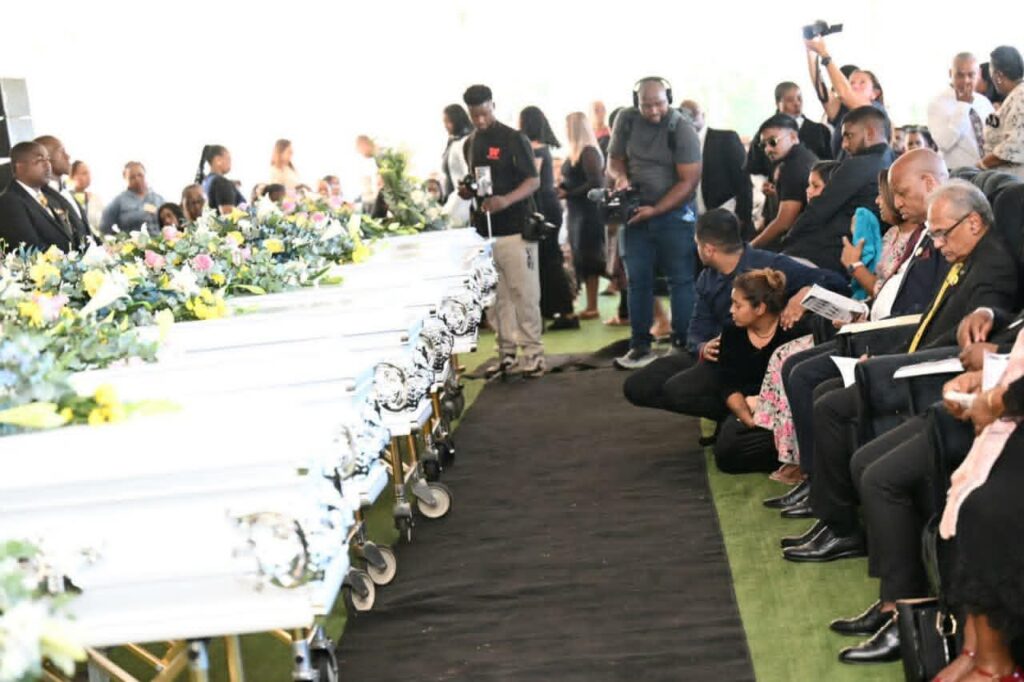
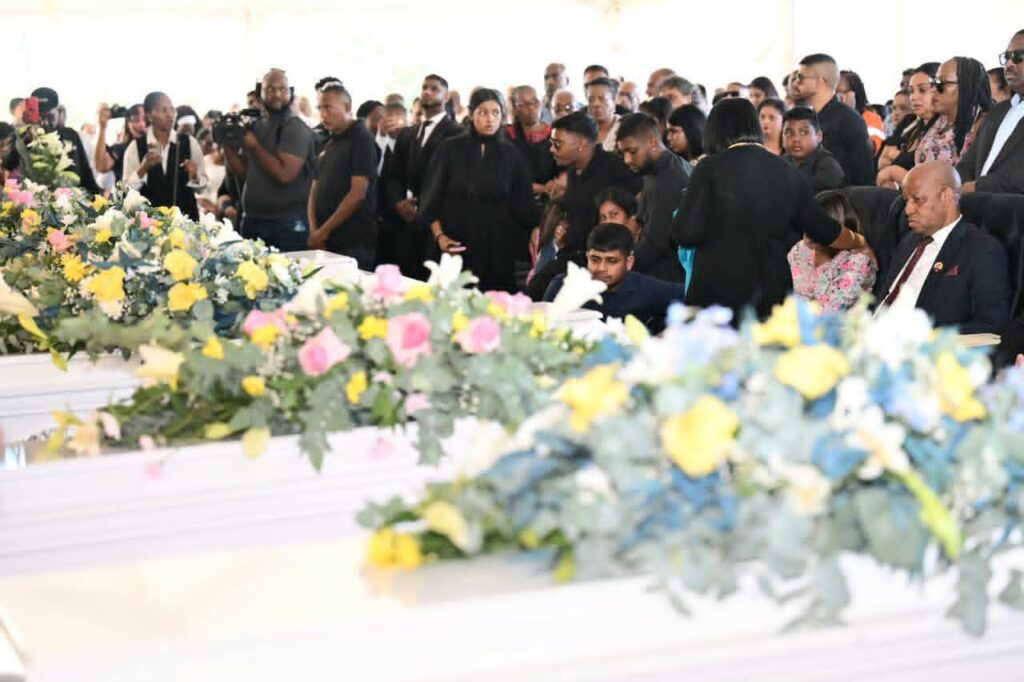
The funeral of the Monswamy family in KwaDukuza was marked by grief, disbelief, and reflection. Hundreds gathered to pay their respects, as seven coffins were laid out side by side, representing a family that once lived under one roof.
Relatives, friends, and community members described the victims as kind, hardworking, and deeply connected to those around them. For many, the loss goes beyond statistics. It is personal, painful, and difficult to accept.
Messages of support have poured in from across the country, including a visit by KwaZulu-Natal Premier Thamsanqa Ntuli, who met with the family to offer condolences and support.
At the same time, the tragedy has sparked conversations in the community about safety, trust, and the reality of crime in both rural and urban areas. Some have questioned how a family could be taken from their home without raising an alarm, while others are focusing on the need for stronger community vigilance.
This is not the first case in KwaZulu-Natal where an entire household has been targeted, and many believe more needs to be done to prevent similar incidents.
Should South Africa Bring Back the Death Penalty for Violent Crime
The Monswamy family murder in KwaDukuza has once again brought the issue of the death penalty into public discussion. Many South Africans, reacting to the scale of the tragedy, have called for harsher punishment for those convicted of such crimes.
Currently, South Africa does not have the death penalty, following its abolition after the end of apartheid. The Constitutional Court ruled that capital punishment violates the right to life and human dignity.
However, cases like the Monswamy family murder continue to test public opinion. Some argue that the justice system needs stronger deterrents, especially for crimes involving multiple victims, kidnapping, and extreme violence.
Others caution against emotional responses, pointing out that the death penalty does not necessarily reduce crime and raises serious legal and ethical concerns. There are also fears of wrongful convictions and irreversible mistakes.
Legal experts often stress that improving investigation quality, strengthening prosecution, and ensuring swift justice may have a greater impact than reintroducing capital punishment.
The debate is complex and deeply personal for many South Africans. For families affected by violent crime, the question is not only about punishment but also about closure and accountability.
The Monswamy family murder case in KwaZulu-Natal remains under investigation, with court proceedings expected to provide more clarity in the coming months. As the community mourns, attention now turns to the justice system and whether it can deliver accountability for the lives lost.
Readers are encouraged to follow updates on this case and explore related stories to stay informed about crime and justice issues affecting communities across the country.
Active Missing Persons Cases in South Africa
Across South Africa, many families are still searching for loved ones who have not returned home. Each case carries its own story and community appeal. If you recognise any of the names below or have information that may assist, please come forward and help bring answers to these families.
- Lindokuhle Siyoyo – Last seen in KwaZulu-Natal
- Duncan Gerhard Koekemoer – Missing person case update
- Gabriel Toyana – Ongoing investigation
- David Waterboer– Missing since Friday, 7 February 2025, Northern Cape
- Kelebogile More – Community appeal for information. Missing since 14 February 2026
You can view the full list of active cases on our Missing Persons in South Africa – Latest Updates page.
Be the first to know – Join our WhatsApp Channel for content worth tapping into! Click here to join!






Leave a Reply